Invasive Plants
These are plants that are not native to the environment. The natural mechanisms that normally control these species in their home ranges don’t exist. Once introduced they establish quickly reproduce and spread. This can cause harm to the environment, economy our human health.
Many invasive plant species produce large quantities of seed. Many invasive plants thrive on disturbed soil and can have aggressive root systems. These root systems can smother the root systems of surrounding vegetation and crowd out native plants. Invasive plant species have contributed to the decline of US endangered and threatened species by competing for moisture, sunlight, nutrients and space.
Japanese Knotweed
✳︎
Poison Ivy
✳︎
Buckthorn
✳︎
Mugwort
✳︎
Bittersweet
✳︎
Japanese Knotweed ✳︎ Poison Ivy ✳︎ Buckthorn ✳︎ Mugwort ✳︎ Bittersweet ✳︎
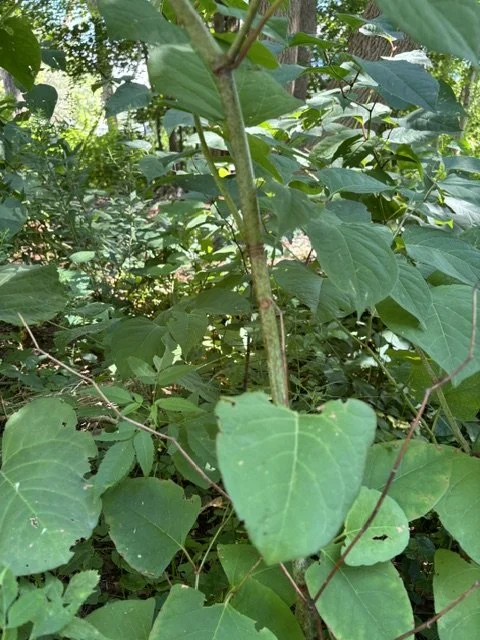
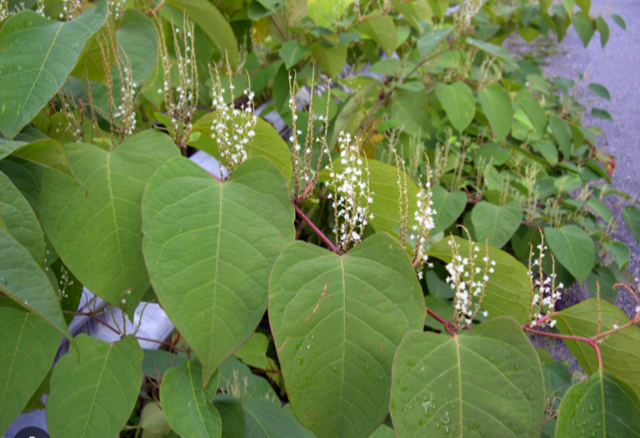
Knotweed is a rhizome. It produces small white flowers in the late summer, with hollow stems that resemble bamboo and can reach 10-13 feet in height. It has been listed by the World Conservation Union as one of the world’s worst invasive species
It has a strong and extensive root system that can damage concrete, brick, walls, drains and paving. It blocks out other vegetation, depriving native species of nutrients and water
To remove knotweed, you must destroy the root system. Do not dispose of roots and fragments in your compost -they will regrow. Instead place in a heavy dirt plastic bag and dispose of in trash. Cut down the knotweed and apply glyphosate to the roots in the late summer. You may need to repeat this for several years to completely eliminate the plant.
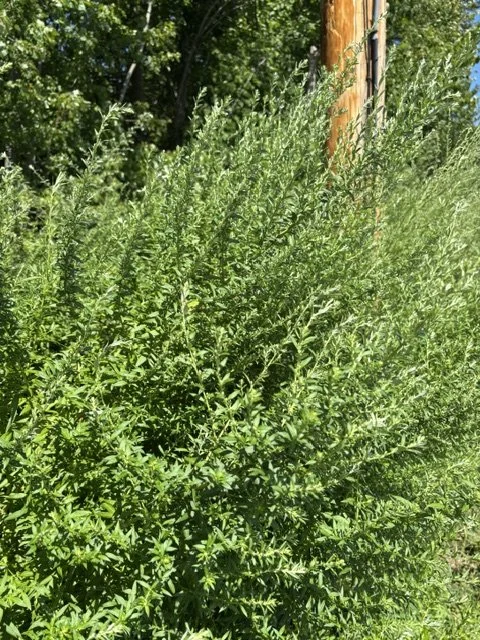
Mugwort is a rhizome with a dense root system. It spreads aggressively and chokes out native vegetation.
You can dig this out but you are going to have to be persistent. Again, don’t throw the roots and remnants into your compost pile or they will grow again. Keeping your beds mulched will help keep invasive plants at bay. Glyphosate application may be needed to permanently eliminate
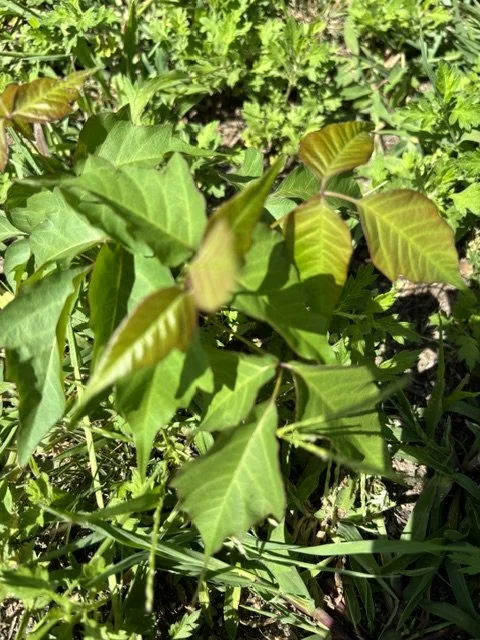
Poison Ivy
“Leaves of Three, Let it Be!”
Each leaf splits in three leaflets and contact gives many an itchy rash that can blister and last for several weeks. Be careful when pulling out of the ground: wear protective clothing and gloves and wash all clothes when finished. The oils can remain on garden tools so be sure to decontaminate too.
Herbicides will eliminate and maybe preferable to hand pulling this weed
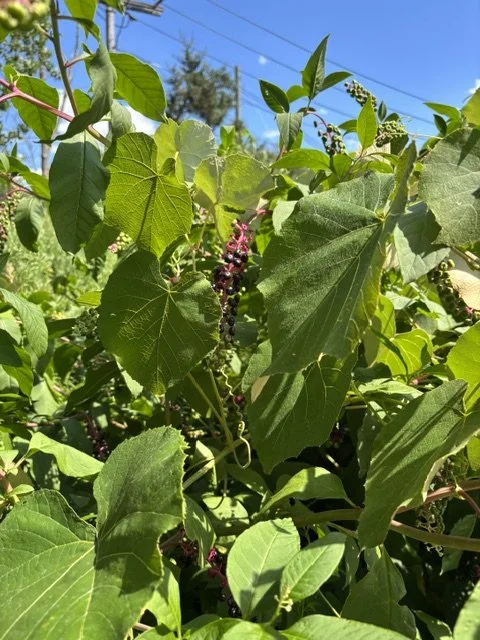
Common Buckthorn is an aggressive shrub, originally from Europe. Again, this plant will crowd out everything else in your garden. It will alter the surrounding soil chemistry with high nitrogen, thereby hindering native plant growth. Cut down established plants and dab remaining truck with glyphosate. Pull smaller seedlings, being sure to get all the root so the plant cannot regrow. Add native plants to the area to avoid buckthorn seeding again
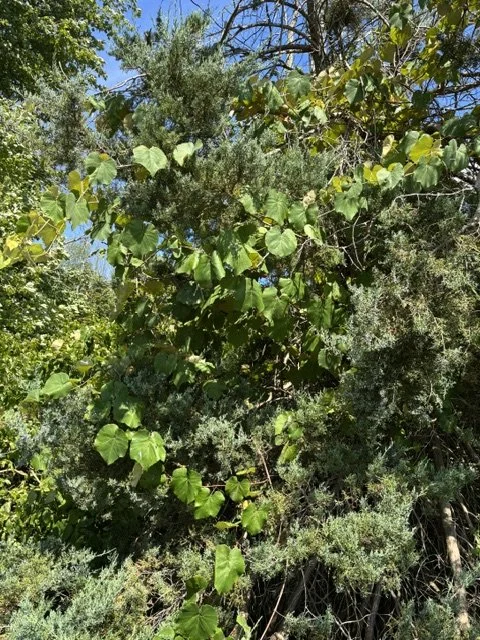
Bittersweet forms vines which twist around shrubs and trees, smothering them. Pull small shoots and keep area around trees and shrubs clear from weeds. Larger vines should be cut at the base: don’t pull the vine as the tree or shrub branches will likely break. This is a persistent invasive weed and once established, it will likely kill the host plant. Be vigilant and pull small shoots when they appear.